 Call now


Workdays: 9:00 am - 8:00 pm
Saturday: 10:00 am - 5:00 pm
Sunday: closed
Workdays: 9:00 am - 8:00 pm
Saturday: 10:00 am - 5:00 pm
Sunday: closed
Dental sedation in Riga
What is dental sedation?
Sedation helps reduce anxiety and tension
during dental treatment.
Medication helps the patient feel calmer,
more relaxed and may cause drowsiness.
The type and depth of sedation are selected individually.
Sedation does not replace local anaesthesia when
numbing of the treatment area is required.
Who may benefit from dental sedation?
Sedation may help patients who experience significant anxiety or discomfort during dental treatment.
Dental anxiety
For patients who experience significant fear or anxiety about dental treatment.
Long procedures
When a longer or more extensive dental procedure is planned.
Strong gag reflex
In some cases, sedation may help make treatment more comfortable.
Surgical procedures
Sedation may be considered for implantation, tooth extraction and other procedures.
Difficulty sitting for long periods
For patients who find it difficult to remain comfortable during lengthy treatment.
Complex treatment
For example, during extensive endodontic or combined dental treatment.
How does treatment with sedation work?
Sedation is planned individually according to the patient's health and the dental procedure being performed.
Consultation
Your health information, current medications and planned dental treatment are reviewed.
Preparation
Before the procedure, you receive individual instructions on how to prepare for sedation.
Sedation and treatment
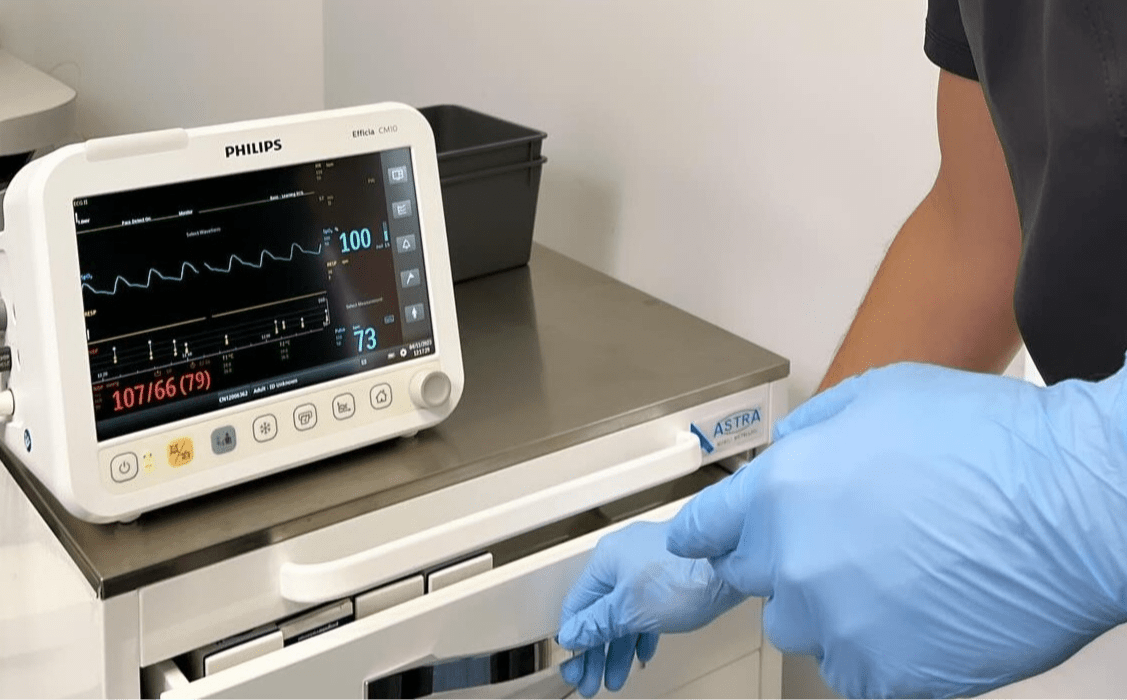
Sedative medication is administered intravenously, and your condition is monitored throughout the procedure.
Recovery
After treatment, you remain under observation until it is safe for you to leave the clinic.
Suitability for sedation is assessed individually
Before sedation, the patient's health, current medications and the extent of the planned dental treatment are taken into account.
Medical history
Information about your health and current medications is reviewed.
Anaesthesiologist assessment
Suitability for sedation and the most appropriate approach are determined individually.
Patient monitoring
Your condition is monitored throughout the procedure.
Sedation prices
The cost of sedation depends on the duration of the procedure and the required amount of treatment.
Does visiting the dentist make you very anxious?
Workdays: 9:00 am - 8:00 pm
Saturday: 10:00 am - 5:00 pm
Sunday: closed
Contacts:
pieraksts@33zobs.lv
info@33zobs.lv
+371 67270099
+371 26805150
Stabu iela 44 - 19, Rīga
Or call +371 67270099/+371 26805150, send e-mail to pieraksts@33zobs.lv!